
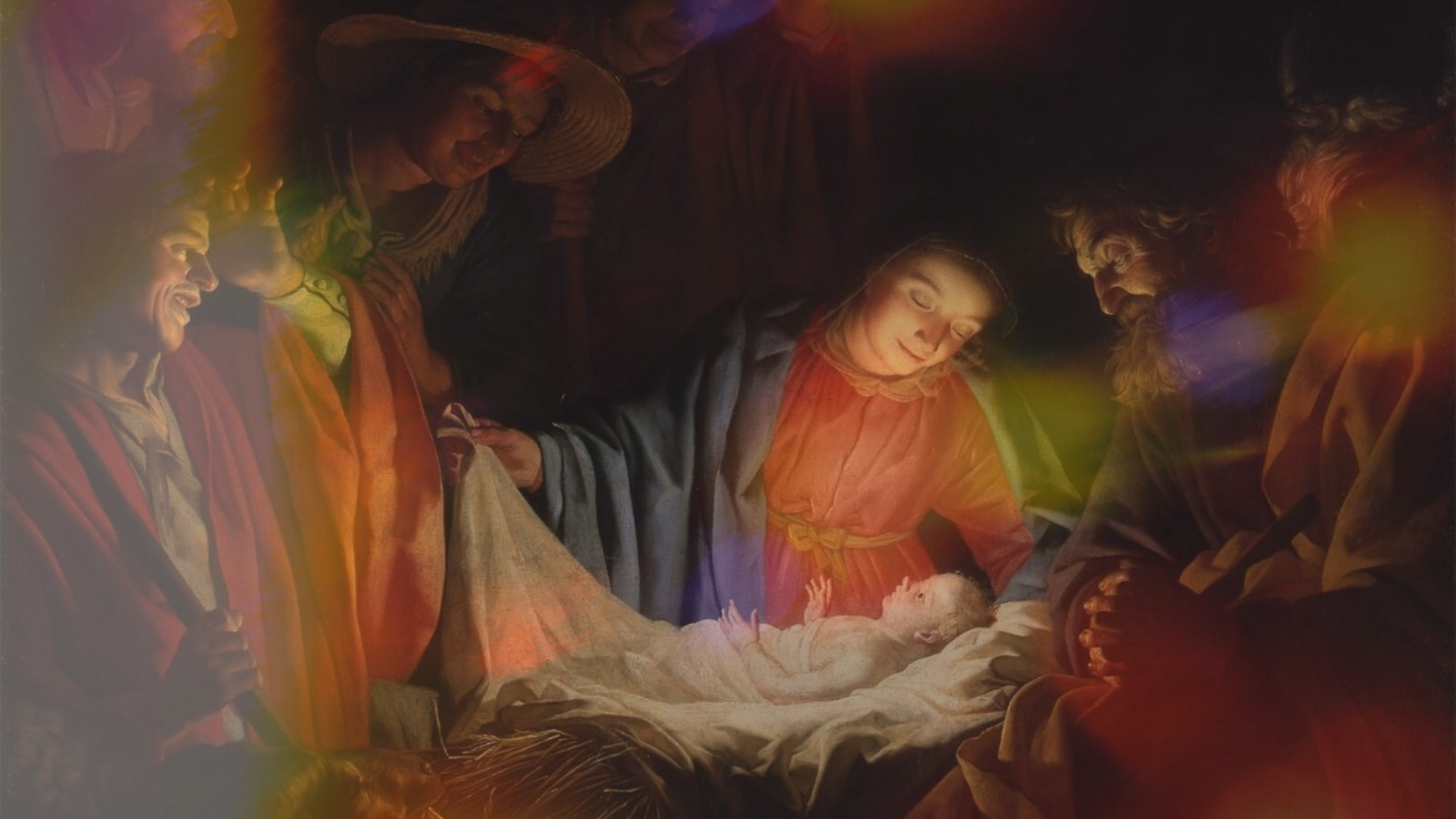
Before this years Advent season begins, a few basics — what Advent is, when it happens, and why the Church keeps it as its own season, distinct from Christmas itself.
What Advent is
The word Advent comes from the Latin adventus, meaning “coming” or “arrival.” Advent is the season of preparation before Christmas, when the Church celebrates the incarnation — God taking on flesh in Jesus Christ. It is a season of expectancy, preparation, and longing.
When Advent is
Advent is the first season of the liturgical (Church) year — its “New Year’s Day.” It begins on the fourth Sunday before Christmas and ends on Christmas Eve, which is why its length shifts slightly from year to year. In 2026, Advent begins on Sunday, November 29 and ends on Thursday, December 24 — the span of this devotional.
The liturgical year in brief
The Church marks time differently from the ordinary calendar. Following the pattern of Israel’s feasts and Sabbaths, the liturgical year turns our twelve months into sacred time, tracing the mystery of salvation through the life of Christ. In the Western calendar its main seasons are: Advent, Christmastide, Epiphany, Lent, Holy Week, Eastertide, and Ordinary Time. The year revolves around two great movements — the welcome of the Incarnation, from Advent through Epiphany, and the victory of the Resurrection, from Lent through Eastertide — with Ordinary Time given to living out the Church’s calling in the world.
Why we keep Advent: Already and Not Yet
We remember. Advent puts us in the place of God’s people before Jesus’s birth — waiting, longing, and wondering what it was like to hope for a Messiah.
We anticipate. Advent looks forward to the return of Christ, when He will make right all wrongs and complete the work of redemption.
We prepare today. Advent is also daily preparation: inviting the Holy Spirit to make room in our hearts, minds, and homes — the way we ready a house for a beloved guest. We live in the tension of the “already” (Christ has come and saved us) and the “not yet” (redemption is not finished, and we are still a work in progress).
Our posture for Advent
Advent’s posture is childlike, expectant joy held together with honest reflection. It gives us space to feel what it means to wait on God — to contemplate our need for His presence before we feast in it. That delay is a gift, not a punishment: the delight of Christmas is better savored after we have taken time to prepare inwardly for the arrival of Christ.
Who Advent is for, and where it is kept
Advent belongs to the whole Church, and it is for everyone — including anyone who is unsure what they believe and wants to explore what it means to follow Christ. It is kept in church sanctuaries during the four Sundays before Christmas, and just as truly at home — around a dining table, coffee table, or hearth — among family and friends, or quietly on your own.
How we keep Advent: candles and colors
There is no single right way to keep Advent, and less is more: a daily reading and a few straightforward practices are enough. Its most familiar visual focus is a wreath with candles — one for each week, plus a white Christ candle lit at Christmas.
Purple (in some traditions, blue) is the traditional color of Advent — the color of royalty, for the coming King, and of repentance, as we reflect on the state of our souls.
The pink (rose) candle, lit in the third week, symbolizes joy breaking into our sober anticipation — God has already drawn near in the incarnate Christ.
The white candle at the center is the Christ candle, lit on Christmas Eve or Christmas Day.
In this devotional the four candles carry the themes of our sermon series, in order: Hope, Peace, Joy, and Love.
Supplies, if you want them, are simple: four candles (three purple or blue, one pink) and one white candle, something to hold them (a wreath, log, jars, or candlesticks), and a Bible. Nothing more is required — if all you do is read each day, you have kept Advent.
Advent is not Christmas — and that is good news
Advent is a separate season from Christmastide. Christmastide — the feast of Christmas — begins on December 25 and traditionally lasts twelve days, through January 5, ending as Epiphany begins on January 6. Keeping Advent as preparation, and Christmas as feasting, means December 26 is not an abrupt letdown: the celebration is not over, it has only just begun. Enjoy the holiday season around you with grace — the purpose of Advent is to draw near to God’s heart for redeeming the world, not to earn points by avoiding Christmas.
Two saints’ days in the season
Saint Nicholas Day — December 6. Nicholas, a third-century bishop of Myra, was known for generous, anonymous giving to the poor — most famously providing dowries for three sisters who had none. His life is the origin of our modern Santa Claus, and his day is a fitting Advent reminder to give generously in the name of Christ, without needing recognition.
Saint Lucia Day — December 13. Lucia (Saint Lucy) of Syracuse, martyred under Diocletian, is remembered for bringing provisions — and light, from candles she wore — to Christians hiding in the catacombs. Honored near the darkest days of the year, she reminds us that God pierces darkness with light.
Shadow and light
In the northern hemisphere, Advent begins as the days grow shorter and darker, moving toward the shortest day of the year. That is no accident of mood: Jesus arrived in a world of shadows — poverty, political unrest, and injustice — born to parents of no renown, in a town nobody expected good to come from. God redeems darkness. Each candle we light pushes back a little more of it, reminding us of the gift who came more than 2,000 years ago and of the hope still to come, when Christ returns and the light wipes out darkness forever. Advent is pregnant with anticipated arrival: it acknowledges the shadows, and dims them with burgeoning light.
About this devotional
This devotional follows Rise Community Church’s four-week Advent sermon series: “Living in Advent”
Each week opens on Sunday with the theme of that week’s message and carries it through the week, drawing on the same Scriptures and word studies from the series — yakhal and qavah (hope), shalom and shalem (peace), sameakh, gil, ranen and sason (joy), and ahavah and agape (love). The final week is shorter by design: it ends on Christmas Eve, Thursday, December 24, with the candle lit and the waiting over.
How to use it
Read the day’s Scripture first — the short focus verse is printed here, but read the full passage in your Bible when you can.
Read the reflection slowly. Each one is written to take about five minutes.
Pray the printed prayer, then add your own words.
Do the practice. Each day ends with one small, concrete step — Advent is meant to be lived, not just read.
Doing this with family or a group? Read it aloud at the table and share answers to the practice together.